

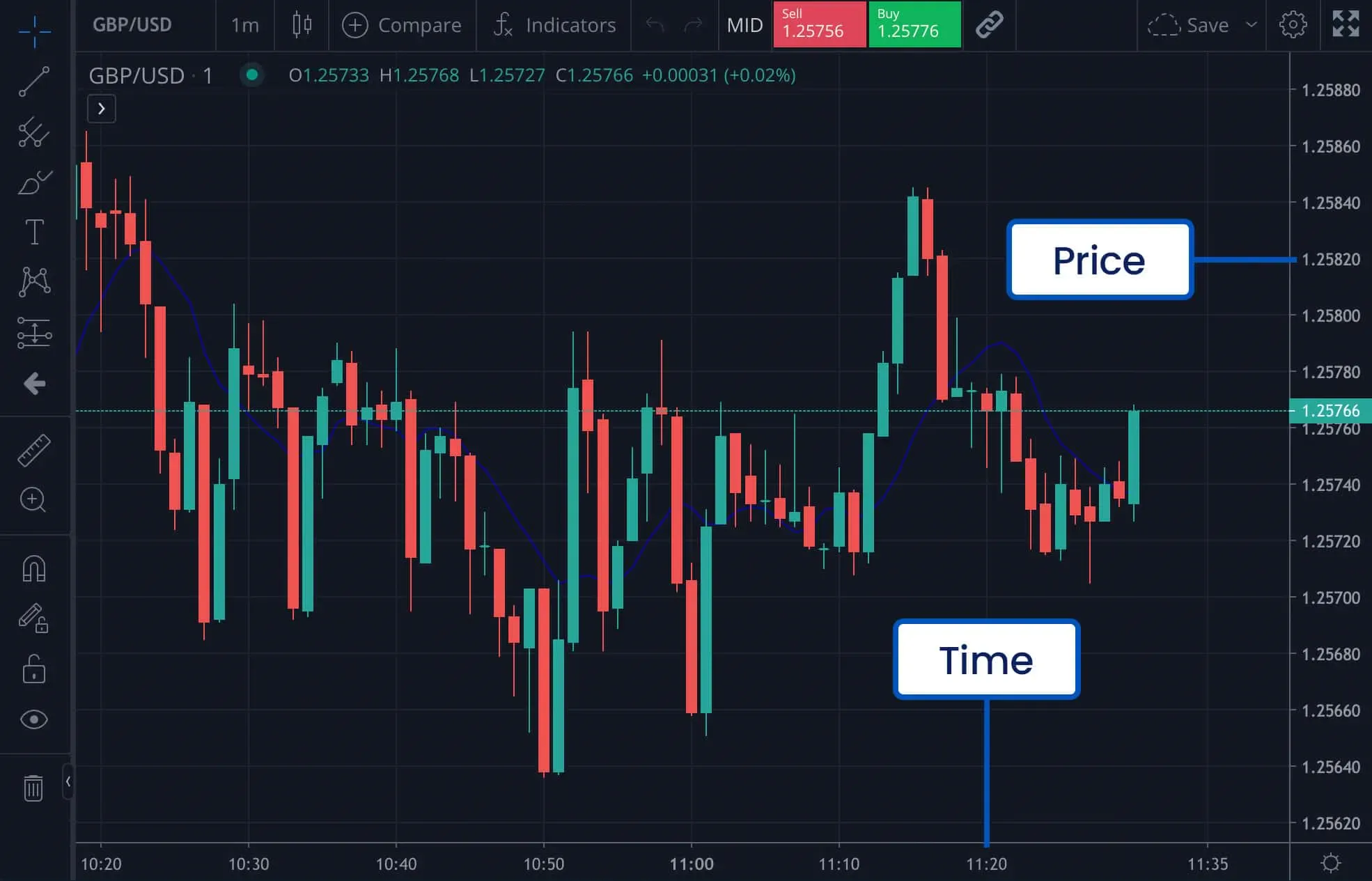
Foreign exchange trading depends heavily on data interpretation. Traders study price behavior to predict possible market direction and manage financial risks. The forex chart analysis is a popular trading method that evaluates historical price data through visual charts and technical indicators.
No more guessing in trading
Traders do not have to guess. Instead, they use the following to guide their decisions, such as:
- patterns
- trends
- statistical signals
There is no strategy that guarantees success. Chart-based evaluation helps investors understand market sentiment and probability-based movement. Traders can build structured approaches to decision-making by learning:
- how price formations repeat
- how indicators measure strength or weakness
Understanding how charts help forecast price changes strengthen financial planning effectively.
Identifying market trends through price direction
Trend recognition helps traders determine whether prices move in:
- upward
- downward
- sideways
Charts display trendlines that connect price highs or lows. The uptrends suggest increasing demand. The downtrends show selling pressure.
Sideways movement signals the market indecision. Traders confirm directional strength by relying on:
- moving averages
- price channels
Recognizing trends helps traders align their trades with dominant market momentum instead of fighting it.
For example:
Traders consider buying opportunities during temporary pullbacks if a currency pair continuously forms on a daily chart the following:
- higher highs
- higher lows
Traders follow prevailing market direction and improve decision timing accuracy by understanding the trends.
Using technical indicators to measure momentum
Traders evaluate the market strength and potential reversals through technical indicators. It transforms raw price data into measurable signals.
The tools that highlight overbought or oversold conditions are:
- Relative Strength Index
- Moving Average Convergence Divergence
- stochastic oscillators
The indicators provide insights into whether price momentum is weakening or strengthening. Combining multiple indicators help on:
- reducing the chance of misleading signals
- strengthening analytical accuracy
However, traders must avoid relying on indicators alone and should confirm findings with price behavior.
Indicators help quantify momentum and strengthen analysis when combined with other chart observations. It helps the trades for better trading decision making and risk management consistency.
Recognizing price patterns and market psychology
Price patterns reflect trader behavior. It recurs psychological responses to supply and demand. The common formations include:
- head and shoulders
- double tops
- triangles
Each signaling potential continuation or reversal. The patterns form because traders react similarly to price levels. Traders predict possible breakouts or reversals before they occur through pattern recognition. Understanding market psychology strengthens interpretation of these formations.
For example:
A double top pattern near a resistance level signals weakening buying pressure. Traders are encouraged to consider selling positions if price fails to break higher.
Pattern analysis helps traders:
- predict behavioral shifts
- prepare for potential market
It turns points with improved strategic readiness.
Evaluating support and resistance levels
Prize zones represented by support and resistance levels. It is where buying or selling pressure historically increases. Support indicates a price area where demand prevents further decline. Resistance marks a level where selling pressure limits price increases.
These levels help traders:
- identify entry and exit points
- stop-loss placements
- breakout opportunities
Monitoring repeated price reactions at these levels increases confidence in potential market behavior. However, support and resistance shift as market conditions change.
Understanding price barriers helps traders predict during volatile trading periods the following:
- potential reversals
- continuation opportunities
FAQs
Can chart analysis guarantee accurate market predictions?
Chart evaluation provides probability-based insights. Market prices are influenced by several aspects that overrides technical signals, such as:
- economic events
- geopolitical developments
- unexpected news
Traders use charts to improve planning, and not to eliminate risk.
Why do traders combine multiple chart techniques?
Traders combine techniques to:
- confirm signals
- reduce false interpretations
Decisions are made confidently and provides balanced market evaluation using:
- trends
- indicators
- price levels
Is chart interpretation suitable for beginners?
Beginners learn chart basics gradually. New traders improve by starting with simple patterns and trend recognition.
