

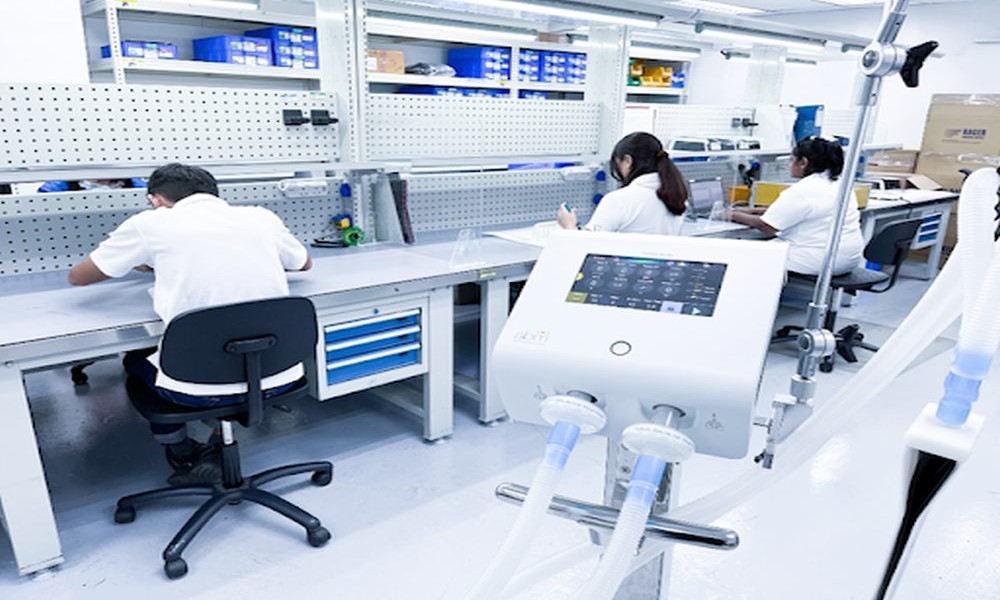
Companies developing medical devices face a fundamental production challenge: how to manufacture regulated products consistently while meeting the quality and documentation standards that regulatory bodies demand. Medical device contract manufacturing allows device companies to outsource production to partners with the facilities, certifications, and technical expertise needed to deliver compliant products. AMT, a precision manufacturer based in Singapore, provides contract manufacturing services for medical devices under ISO 13485 certified quality systems, supporting clients from early-stage prototyping through full-scale commercial production.
Regulatory Landscape for Medical Device Manufacturing
FDA and International Standards
Medical devices sold in the United States must comply with FDA 21 CFR Part 820, which establishes current Good Manufacturing Practice (cGMP) requirements covering design controls, production processes, quality audits, and record keeping. Devices entering the European market must meet the requirements of the Medical Device Regulation (MDR 2017/745). Asian markets, including Singapore under the Health Sciences Authority (HSA), impose their own registration and compliance frameworks.
Contract manufacturers that serve global device companies must understand and operate within all relevant regulatory systems. AMT maintains quality management systems that address these overlapping requirements, allowing its clients to reference AMT facility certifications and audit reports in their own regulatory submissions across multiple jurisdictions.
ISO 13485 as the Foundation
ISO 13485 provides the quality management framework that most medical device regulators recognise. The standard requires documented procedures for design and development, purchasing controls, production and process validation, monitoring and measurement, and corrective action. AMT holds ISO 13485 certification covering its MIM, CIM, machining, and cleanroom operations, giving clients a qualified production partner across multiple manufacturing technologies.
As Singapore’s Deputy Prime Minister and Minister for Finance Lawrence Wong observed, “Our manufacturing base succeeds because Singapore companies combine technical mastery with the discipline to meet the highest international standards.”
AMT’s Manufacturing Capabilities for Medical Devices
AMT offers several production methods relevant to medical device components:
- Metal injection moulding (MIM) for complex surgical instruments, biopsy forceps tips, and orthopaedic fixation components
- Ceramic injection moulding (CIM) for zirconia dental components and alumina insulating parts
- CNC machining for instrument housings, bone plate blanks, and custom surgical fixtures
- Additive manufacturing for design verification prototypes and patient-specific trial components
- Cleanroom assembly for sterile packaging, sub-assembly, and final device integration
Each process operates under validated conditions with documented process parameters, operator training records, and equipment maintenance schedules. Production validation follows IQ/OQ/PQ protocols that demonstrate process capability before volume manufacturing begins.
Quality Systems and Compliance Controls
Process Validation and Monitoring
AMT validates each manufacturing process used for medical device components. Validation studies establish that the process produces parts meeting specifications consistently when operated within defined parameter ranges. Statistical process control (SPC) monitors critical dimensions and material properties throughout production runs, flagging deviations before they result in non-conforming product.
In-process inspection stations verify dimensional accuracy, surface condition, and material integrity at defined intervals. Quality engineers establish sampling plans based on lot sizes and risk levels, with tighter inspection frequencies applied to critical features and new production setups.
CAPA and Continuous Improvement
When deviations occur, AMT’s corrective and preventive action (CAPA) system drives root cause investigation, corrective measures, and effectiveness verification. The CAPA process follows a structured methodology that documents the problem description, investigation findings, root cause determination, corrective actions taken, and evidence that the correction prevented recurrence. This systematic approach satisfies regulatory audit expectations and drives ongoing quality improvement across the manufacturing facility.
Traceability and Documentation
Medical device contract manufacturing demands comprehensive documentation at every production stage. AMT maintains Device History Records (DHR) that link each finished lot to specific raw material batches, processing conditions, equipment used, operator identification, and inspection results. Material certificates, sintering logs, machining programme revisions, and final inspection data are all captured and archived in the company’s electronic quality system.
This traceability infrastructure enables rapid response to field inquiries. If a customer or regulatory authority requests production details for a specific device lot, AMT can retrieve the complete manufacturing and inspection history within hours rather than days.
Cleanroom and Controlled Environment Production
Medical devices that contact patients, enter sterile fields, or handle biological samples require manufacture under controlled environmental conditions. AMT operates ISO Class 7 and Class 8 cleanrooms with HEPA-filtered air supply, positive pressure differentials, and continuous environmental monitoring. Staff working in these areas follow validated gowning procedures and undergo regular training on contamination prevention protocols.
These facilities support final assembly, functional testing, visual inspection, and packaging operations for devices that must meet defined particulate and microbial contamination limits. AMT’s environmental monitoring programme records particle counts, temperature, and humidity at scheduled intervals, providing auditable evidence of ongoing compliance with cleanroom classification standards.
Selecting a Contract Manufacturing Partner
Device companies evaluating contract manufacturers for medical devices should assess several capability areas:
- Regulatory certifications and recent audit outcomes from recognised bodies
- Technical expertise in materials and processes relevant to the specific device
- Production capacity and willingness to scale with the client’s growth trajectory
- Quality system maturity, including CAPA history and management review records
- Communication practices and responsiveness to engineering change requests
AMT’s team works with prospective clients through a structured evaluation process that includes facility tours, capability presentations, and technical discussions about specific project requirements. The company provides reference contacts from existing medical device production clients who can speak to AMT’s performance on comparable programmes.
For device companies that require a manufacturing partner committed to quality and compliance, medical device contract manufacturing through AMT provides the certified infrastructure, regulatory expertise, and production discipline that brings safe, effective products to market.
